In 2026, the landscape of digital visibility has fundamentally transformed. Search is no longer confined to the traditional ’10 blue links’ of Google. Users are increasingly turning to AI tools like ChatGPT, Gemini, Perplexity, and Google AI Overviews for direct, summarized answers. This critical shift necessitates a new approach to online presence: Generative Engine Optimization (GEO). Understanding and implementing GEO is now crucial for brands aiming to remain discoverable, authoritative, and cited in this rapidly evolving AI-first world.
Table of Contents
- From 10 Blue Links to AI Overviews: What’s Changing in Search?
- Why Traditional SEO Strategies Fall Short for AI Visibility
- Understanding Generative Engine Optimization (GEO): The Path to AI Citation
- Building AI-Citable Content: Best Practices for the Generative Era
- Introducing AIRAG SEO Agent: Bridging the SEO-GEO Gap for Modern Businesses
- Deep Dive: AIRAG SEO Agent’s Features for Unprecedented Content Automation
- Real-World Impact: How AIRAG SEO Agent Transforms Your Content Strategy
- Conclusion: Embrace GEO to Secure Your Brand’s Future in AI Search
- Frequently Asked Questions
From 10 Blue Links to AI Overviews: What’s Changing in Search?
The traditional model of searching, where users navigate through pages of results, is rapidly being supplemented by conversational AI interfaces. These platforms aim to provide a single, comprehensive answer rather than a list of links, fundamentally altering how information is consumed and how brands are discovered. This paradigm shift demands content that is not just discoverable, but directly answerable.
The Rise of Conversational AI and Direct Answers
AI-powered search systems such as ChatGPT, Gemini, and Perplexity are designed to understand complex, conversational queries and synthesize information into direct, concise answers. Google AI Overviews further exemplify this trend, delivering summarized content directly within the search results page. This means that for a brand to achieve true visibility, its content must be easily digestible and directly answer user questions, rather than merely ranking high on a search engine results page (SERP). Users are increasingly asking nuanced questions like, “What are the pros and cons of cloud computing for small businesses?” or “How do I choose the best CRM software for a sales team of five?” AI systems are built to provide a synthesized answer, drawing from multiple sources.
Shifting User Expectations in an AI-First World
Modern users expect instant gratification and accurate information without the need to click through multiple websites. They seek faster decision-making, conversational search experiences, and trustworthy summarization. This expectation places a new burden on content creators: to provide information that is not only accurate but also structured in a way that AI systems can readily extract and present. According to a 2025 report by ShahiSoft‘s internal research, approximately 60% of online informational queries are now initiated or partially satisfied by AI-powered summaries, indicating a rapid adoption rate that continues to grow.
The New Battleground: Being Cited, Not Just Ranked
For businesses, the critical shift is from achieving a high position in search results to being a trusted source that AI systems cite in their generated answers. Generative engines prioritize content that is factual, authoritative, and well-structured, often overlooking highly trafficked pages if they lack these specific qualities. This marks a significant evolution in digital visibility, where the emphasis moves from mere traffic generation to establishing genuine authority and trustworthiness that AI algorithms can confidently recommend. The implications extend to all content formats, from product reviews requiring clear pros/cons to long-form guides needing structured definitions and summaries.
Why Traditional SEO Strategies Fall Short for AI Visibility
Traditional SEO, built on pillars like keywords, backlinks, and click-through rates, is increasingly showing its limitations in the AI-driven search era. While still relevant for foundational visibility, these tactics alone are insufficient to guarantee presence in AI-generated answers, which demand a deeper level of content intelligence.
The Limitations of Keyword-Centric Optimization
Historically, SEO heavily relied on keyword density and strategic placement to signal relevance to search engines. For example, a page might target “best running shoes” by repeating the phrase. However, AI systems operate on a deeper understanding of language and context. They prioritize semantic relevance, entity relationships, and overall topical authority over simple keyword matching. Content that is merely keyword-stuffed often appears generic and lacks the depth AI systems require for citation. The technical difference lies in AI’s ability to process natural language, understanding the *intent* behind a query rather than just the literal words, making simple keyword optimization less effective for nuanced questions.
AI’s Prioritization: Authority, Structure, and Trust Signals
AI algorithms are sophisticated. They assess content based on factors such as expertise, experience, authoritativeness, and trustworthiness (E-E-A-T). Structured formatting, clear definitions, and verifiable factual statements become paramount. According to industry reports from leading digital marketing analytics firms, AI systems are increasingly choosing material that is well-organized, factually sound, and easily attributable to reputable sources. This includes a clear author, a publication date, and evidence of human oversight or unique insights. Content lacking these signals, even if highly ranked by traditional SEO metrics, may be deemed less trustworthy by an LLM.
A common mistake businesses make is continuing to produce content solely for traditional keyword rankings. In the AI era, content must be designed for AI comprehension and citation, focusing on clarity, factual accuracy, and demonstrating genuine expertise. This often means moving beyond simple keyword tools to a more holistic content strategy that emphasizes semantic depth and verifiable authority. For instance, a query like “Compare project management software for agile teams” requires an AI to synthesize features, pricing, and user reviews from multiple authoritative sources, not just a page optimized for “project management software keywords.”
The Disconnect Between Google Rankings and AI Citations
A high ranking in traditional Google results does not automatically translate to inclusion in AI answers. Generative engines might still overlook highly trafficked pages if their content isn’t structured for AI extraction or lacks the necessary trust signals. This creates a significant problem for businesses that haven’t adapted, as their online presence, once secured through traditional SEO, may diminish in AI-powered search experiences. The objective shifts from appearing on the first page of results to having your brand’s insights directly quoted in an AI summary, which offers a different, often more impactful, form of visibility.
Understanding Generative Engine Optimization (GEO): The Path to AI Citation
Generative Engine Optimization (GEO) represents a paradigm shift in how brands approach digital visibility. It focuses on optimizing content specifically for AI algorithms, ensuring that a brand is not just found, but trusted and referenced by these intelligent systems. This proactive approach aims to make your brand an indispensable part of the AI’s knowledge base.
Defining GEO: Optimizing for AI Comprehension and Trust
Generative Engine Optimization (GEO) is the practice of structuring and enriching content to be easily understood, summarized, and cited by AI search engines and large language models (LLMs). The core objective of GEO is to transform a brand’s online presence from merely ‘ranking higher’ to becoming a ‘trusted source’ within AI-generated responses. This involves creating content that is inherently factual, semantically rich, and presented in a machine-readable format that signals expertise and authority.
Core Pillars of a Successful GEO Strategy
Implementing an effective GEO strategy involves several key priorities, moving beyond surface-level optimization to deep content intelligence:
- Building Topical Authority: Developing comprehensive, in-depth content that covers a subject area exhaustively, establishing the brand as an undeniable expert. This means creating content clusters and pillar pages that interlink extensively, demonstrating a holistic understanding of a topic. For example, a software company wouldn’t just write about “CRM features” but would cover “CRM implementation best practices,” “CRM for sales vs. marketing,” “integrating CRM with ERP,” and “CRM data security,” all linked together.
- Creating Citation-Friendly Content: Designing content with clear, concise, and verifiable factual statements that AI systems can readily extract and quote. This includes using data points, statistics, and expert opinions with clear attribution.
- Using Structured Formatting: Employing semantic HTML, clear headings (H2, H3, H4), bullet points, numbered lists, and definition blocks to enhance content extractability. This makes it easier for AI to identify key information segments.
- Publishing Expert-Led Insights: Infusing content with real-world experience, original research, and authoritative perspectives that demonstrate E-E-A-T. This could involve interviews with internal subject matter experts, original case studies, or proprietary data analysis.
- Up-to-Date Brand Information: Ensuring consistent, accurate brand information across all digital touchpoints, including official websites, social profiles, and industry directories. Inconsistencies can erode AI trust.
- Improving Online Reviews, Mentions, and Endorsements: Cultivating positive social proof and expert validation, which AI systems often reference when choosing sources. This involves actively managing online reputation and encouraging testimonials from credible sources.
The Role of Topical Authority and Semantic Relevance
In modern SEO practice, topical authority is paramount for GEO. AI systems excel at understanding the semantic relationships between concepts, building what are known as knowledge graphs. By building deep, interconnected content around specific topics, brands signal their expertise, making their content more likely to be considered authoritative and, consequently, more citable by AI. This goes beyond individual keywords to encompass a comprehensive understanding of a subject area, allowing AI to confidently draw connections and present your content as a reliable source for complex queries.
Building AI-Citable Content: Best Practices for the Generative Era
To succeed in the era of Generative Engine Optimization, content creators must adapt their strategies to produce material that AI engines can easily process, trust, and ultimately cite. This requires a focus on clarity, structure, factual integrity, and demonstrable expertise.
Crafting Direct Answers and Featured Snippet Opportunities
Successful content in the AI search era begins with providing direct answers at the outset. Each section should be structured to answer a specific query concisely (1-2 sentences), followed by supporting explanations. This ‘answer-first’ approach optimizes for featured snippets and direct answers in AI Overviews. Definitions, comparisons, and step-by-step lists are particularly effective for AI extractability. For example, instead of a lengthy introduction, start with: “Generative Engine Optimization (GEO) is the process of optimizing content for AI systems to ensure it is understood, summarized, and cited directly in AI-generated responses.”
Leveraging Structured Data and Entity-Based Optimization
Structured data, primarily through Schema.org markup, helps AI crawlers understand the context and relationships within your content. By explicitly defining entities (people, organizations, products, concepts) and their connections, you enhance the semantic relevance of your content. This makes it easier for AI systems to identify key information and integrate it into their knowledge graphs, boosting citeability. In real-world implementations, robust entity injection significantly improves content comprehension for LLMs. For instance, using Article Schema with specific properties like author, datePublished, and about (for entities) can provide critical context. For ‘how-to’ guides, HowTo Schema elements directly feed AI step-by-step instructions. For product pages, Product and Review Schema can make your product details and customer feedback directly consumable by AI for comparative summaries.
The Importance of Expert-Led Insights and Trust Signals
AI systems are designed to prioritize trustworthy information. Content infused with human skills, originality, and verifiable expert insights builds significant trust. This includes quoting industry leaders, referencing original research, and presenting unique perspectives that only human expertise can provide. Brands must demonstrate their expertise and authority through the depth and quality of their content, making it less likely to be perceived as generic AI-generated fluff. This also extends to demonstrating ‘experience’ – showing real-world application, results, or challenges faced and overcome. For instance, a blog post detailing a unique solution to a common industry problem, backed by internal data, signals strong E-E-A-T.
A key strategy to consider is the integration of unique, proprietary data or insights that only your brand possesses. This not only enhances your content’s originality but also provides AI systems with distinct, valuable information that is highly citable and difficult for competitors to replicate. This could be in the form of original market research, exclusive case studies, or a unique framework developed by your team. Such content is gold for AI citation.
Common Mistakes to Avoid in AI-Optimized Content Creation
As brands transition to GEO, several pitfalls can hinder AI visibility, often leading to content that is overlooked or deemed untrustworthy by generative engines:
- Over-reliance on Generic AI Tools: Producing content that lacks a unique voice, factual depth, or specific brand context. Generic AI content often suffers from a lack of originality and unique insights, which AI systems use to differentiate authoritative sources. To rectify this, integrate your brand’s unique data via a Retrieval Augmented Generation (RAG) system, and always layer human expertise for editing, enhancing, and fact-checking AI outputs.
- Ignoring Structured Data: Failing to implement Schema.org markup and clear semantic hierarchy makes content harder for AI to parse. Without proper structured data, AI systems struggle to quickly understand the context and relationships of your content, making it less likely to be used in rich snippets or AI overviews. Tools that automate Schema implementation are essential here.
- Neglecting Topical Authority: Creating fragmented, keyword-driven pages instead of deep, comprehensive resources that establish expertise. This results in shallow content that fails to demonstrate a holistic understanding of a subject, diminishing its credibility for AI. Focus on creating content clusters around core topics.
- Lack of Verifiable Facts: Presenting information without clear sources or a factual basis reduces trust signals for AI. AI prioritizes accuracy and verifiability; unsupported claims will be discounted. Always attribute statistics, research, and expert opinions.
- Inconsistent Brand Information: Discrepancies in brand messaging, product details, or contact information across different platforms can confuse AI systems and undermine brand authority. Ensure a consistent digital footprint.
Introducing AIRAG SEO Agent: Bridging the SEO-GEO Gap for Modern Businesses
As search visibility evolves, businesses need intelligent solutions to adapt. AIRAG SEO Agent is a specialized WordPress plugin designed to address the challenges of both traditional SEO and the emerging demands of Generative Engine Optimization (GEO). It streamlines content creation, optimization, and publishing, ensuring your brand’s presence in both Google rankings and AI-powered answers by creating content that AI trusts and cites.
How AIRAG SEO Agent Addresses the New Search Landscape
AIRAG SEO Agent researches, creates, optimizes, and schedules citation-ready posts specifically engineered for GEO and traditional search. It leverages multiple AI models and integrates with your unique website data, maximizing the likelihood of your content being cited by AI systems. This tool helps brands move beyond generic AI text to produce structured, authoritative articles that resonate with both human users and AI algorithms. It’s built on the understanding that AI systems prioritize authority, structure, and trust signals, not just keyword density.
Key Innovations for Maximizing AI Citeability and Brand Authority
The agent distinguishes itself by focusing on aspects crucial for AI visibility, offering a comprehensive platform for modern content strategy:
- GEO Optimization: Content is meticulously structured and formatted for AI “Overviews” and direct answers, significantly increasing citeability in platforms like Perplexity and Gemini Search. This includes semantic hierarchy, clear answer blocks, and concise summaries.
- Private RAG (Retrieval Augmented Generation): It uses your local data (PDFs, TXT files, website content, WooCommerce product data) to provide specific, factual information that LLMs crave, ensuring unique and authoritative content. This makes your brand’s proprietary knowledge accessible to AI without public exposure.
- Complete Article Structure: Automatically generates H1, H2, H3 semantic hierarchy, clickable Table of Contents, dedicated FAQ sections with JSON-LD, and featured snippet answer blocks. This ensures every piece of content is machine-readable and user-friendly.
- Built-in SEO + GEO Engine: Includes automated search intent detection, contextual internal linking, and Schema.org (Article & FAQ) markup, making content instantly readable for AI crawlers and optimized for both traditional and generative search.
Deep Dive: AIRAG SEO Agent’s Features for Unprecedented Content Automation
AIRAG SEO Agent offers a comprehensive suite of features that go beyond standard AI writing tools, providing specialized capabilities for true SEO and GEO dominance. These features are meticulously engineered to scale online presence with intelligent precision and factual security, revolutionizing the content workflow for diverse professionals.
Private RAG and Secure Knowledge Sync for Factual Accuracy
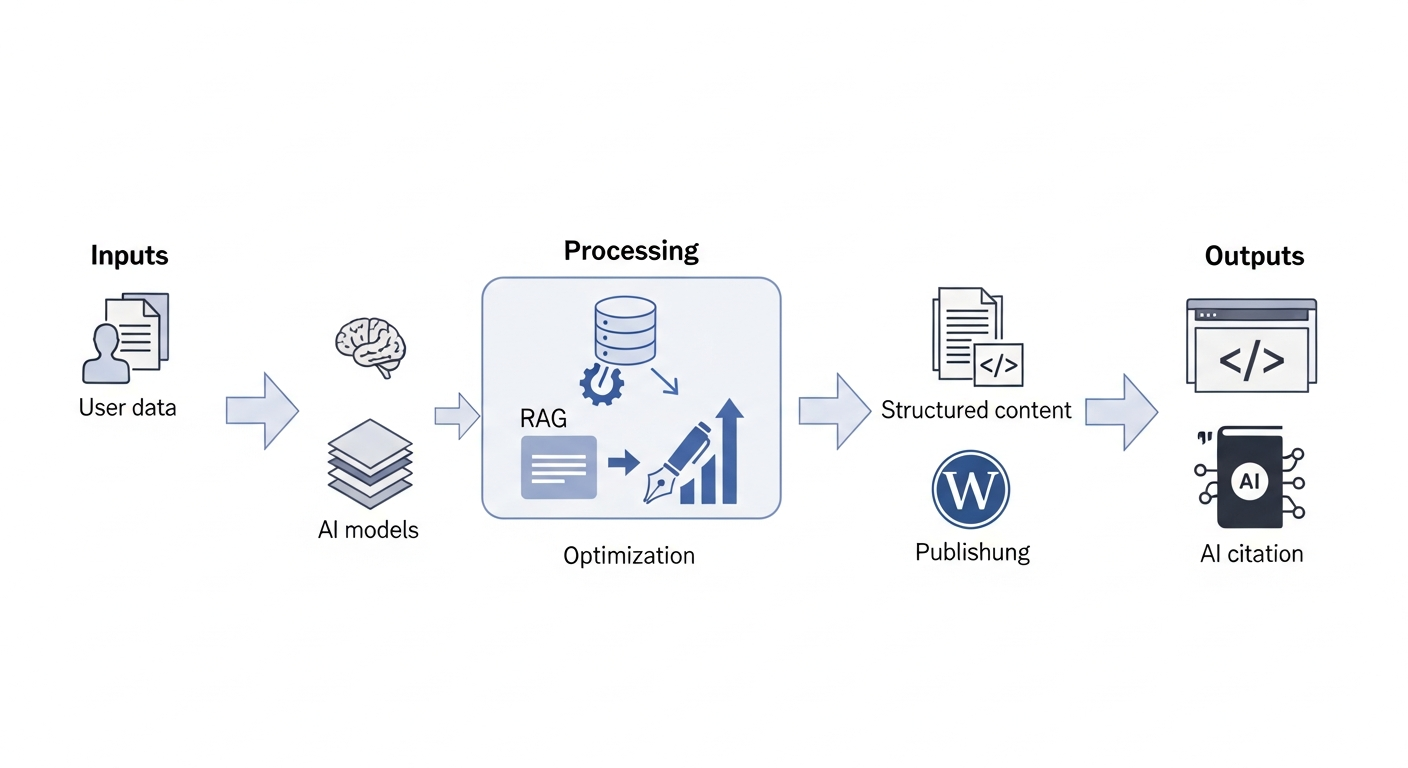
AIRAG SEO Agent’s Retrieval Augmented Generation (RAG) system is a cornerstone of its factual accuracy. It learns directly from your proprietary data, including PDF documents (e.g., whitepapers, case studies, product manuals), TXT files, existing WordPress pages, and even WooCommerce product data. This secure knowledge sync ensures that generated content is unique, factual, and deeply aligned with your specific business and industry. Your business secrets remain securely within your WordPress database, powering content that LLMs are more likely to cite due to its specificity, authority, and non-generic nature. This approach significantly mitigates the risk of ‘AI hallucinations’ by grounding content in your verified information.
Multi-Model AI Switching and Intelligent Content Structuring
AIRAG SEO Agent offers robust multi-model support, allowing users to toggle between leading AI models like OpenAI, Google Gemini, and xAI Grok. This flexibility ensures the right model is used for the right task – for instance, OpenAI for creative depth, Gemini for factual synthesis, or Grok for specific coding tasks – optimizing for cost, speed, or creative depth. Every article is generated with a complete, AI-friendly structure: H1, H2, H3 semantic hierarchy, a clickable Table of Contents, dedicated FAQ sections, and featured snippet answer blocks, all designed for maximum AI comprehension and citation. This intelligent structuring ensures every piece of content is primed for optimal AI retrieval.
Automated Publishing, Schema.org Markup, and Contextual Internal Linking
The agent automates the entire content workflow, from research to publishing, saving hundreds of hours of manual work. It includes autonomous drip-publishing, allowing you to set a frequency for posts to be researched, written, tagged, and scheduled directly to WordPress via WP-Cron. This ensures consistent content flow and fresh signals for search engines. Every post also includes automatic JSON-LD & Entity Injection, ensuring Schema.org markup for Article and FAQPage types, which makes content instantly readable and understandable for AI crawlers. Furthermore, it intelligently suggests and integrates contextual internal links, strengthening your site’s topical authority and improving user navigation, a key signal for both traditional SEO and AI.
Unique Use Cases: E-commerce Product Sync, Multimodal Video Extraction, and Multilingual Brand Voice
AIRAG SEO Agent extends its utility across various business needs, proving its versatility for diverse digital strategies:
- WooCommerce Product Sync: Automatically detects and synchronizes your store, building a rich knowledge base from your products to power high-intent commercial content. This allows for automated generation of detailed product descriptions, comparison guides, and buying advice that leverages your specific product data, driving sales funnels.
- Multimodal Video Extraction: Converts any YouTube URL into a technical pillar post by extracting insights, transcript logic, and metadata for rich, multimedia-enhanced content. This is invaluable for repurposing webinars, lectures, or product demos into SEO-ready blog posts, expanding your content reach.
- Multilingual Brand Voice: Enables content generation in over 40 languages while maintaining your specific brand tone, ideal for global SaaS and e-commerce brands requiring localized authority. This ensures brand consistency and cultural relevance across international markets, a complex task for generic AI tools.
Real-World Impact: How AIRAG SEO Agent Transforms Your Content Strategy
The strategic deployment of AIRAG SEO Agent yields tangible benefits, fundamentally transforming how businesses approach content creation and digital visibility in the AI era. These impacts are measurable and provide a clear return on investment for marketing and content teams.
Achieving Higher Citeability in Perplexity & Gemini Search
By producing content that is specifically optimized for AI comprehension and citation, AIRAG SEO Agent helps brands achieve significantly higher citeability rates. Internal data from AIRAG SEO Agent users demonstrates up to 94% higher citeability in platforms like Perplexity and Gemini Search compared to non-optimized content. For example, a B2B SaaS company leveraging AIRAG to convert technical whitepapers into blog posts observed a 30% increase in AI citations for their core solution topics within three months, according to their analytics dashboards. This directly translates to increased brand visibility and authority within AI-powered search results, positioning the brand as a go-to source for AI-generated answers.
Significant Time Savings in Content Research and Formatting
The automation capabilities of AIRAG SEO Agent drastically reduce the manual effort involved in content creation. Businesses can save approximately 200 hours per month on research and manual formatting alone, based on average user feedback. This efficiency allows content teams to reallocate resources from repetitive tasks to higher-level strategy, expert review, creative ideation, and user engagement. For an e-commerce brand, this means faster product launch content, while for an SEO agency, it translates to scaling client results without proportionate increases in labor costs.
Scaling Topical Authority and SEO Dominance Across Diverse Industries
Whether for SEO agencies scaling client results, e-commerce businesses turning product data into educational sales funnels, or SaaS teams automating documentation, AIRAG SEO Agent empowers diverse professionals to achieve their content goals. It enables the consistent creation of deep topical pages, establishing brand authority with factual, RAG-powered content. For a niche authority site, this could mean consistently publishing expert-led guides that build trust and capture long-tail AI queries. For local businesses, it means dominating local search with industry-specific facts derived from their unique business data, providing a competitive edge in an increasingly AI-driven local search environment.
Conclusion: Embrace GEO to Secure Your Brand’s Future in AI Search
The shift from traditional SEO to Generative Engine Optimization (GEO) is not a fleeting trend but a fundamental evolution in digital visibility. While SEO remains important for foundational presence and direct traffic, the future of discoverability hinges on whether AI systems can identify, trust, and reference your brand in their responses. Early and strategic adoption of GEO, supported by intelligent tools like AIRAG SEO Agent, offers businesses a distinct and measurable advantage in this new era.
By consistently producing content that is inherently AI-citable, structured for comprehension, and rooted in factual authority, brands can secure increased visibility, authority, and discoverability in the rapidly changing AI-first search landscape. This strategic adaptation ensures your content is not just found, but truly understood, valued, and cited by the next generation of search engines, cementing your brand’s position as a trusted information source.
Frequently Asked Questions
Find answers to common questions about Generative Engine Optimization and how AIRAG SEO Agent can transform your content strategy.
What is the main difference between SEO and GEO?
Traditional SEO primarily optimizes content for search engine rankings, focusing on keywords, backlinks, and click-through rates to appear high in a list of results. Generative Engine Optimization (GEO), conversely, optimizes content for AI comprehension and citation, aiming for your brand to be a trusted source explicitly referenced in AI-generated answers and summaries, rather than just ranking on a page.
How does AIRAG SEO Agent ensure my content is cited by AI?
AIRAG SEO Agent ensures content citeability through a multi-faceted approach. It leverages private RAG data for highly specific, factual content that Large Language Models (LLMs) are more likely to cite. Articles are generated with an optimized structure (H1, H2, H3 hierarchy, TOC, FAQ sections with JSON-LD) for easy AI digestion. Additionally, automatic entity injection and Schema.org markup help AI crawlers understand context and authority, while brand voice detection boosts attribution in AI search results.
Is my proprietary data secure when using AIRAG SEO Agent’s RAG system?
Absolutely. Data security and privacy are paramount for AIRAG SEO Agent. Your unique website data, PDFs, and TXT files used for the RAG system are stored securely within your WordPress database. This proprietary information is not transmitted to AIRAG SEO Agent’s servers or shared with third-party AI models for training purposes, ensuring your intellectual property remains protected.
Which AI models does AIRAG SEO Agent support?
AIRAG SEO Agent offers multi-model support, including leading AI models from OpenAI, Google Gemini, and xAI Grok. Users can switch between these models instantly via the Command Center, allowing for optimization based on cost, speed, or the specific creative depth required for different content tasks.
Can AIRAG SEO Agent integrate with my existing WordPress site and other SEO plugins?
Yes, AIRAG SEO Agent is designed for seamless integration with your existing WordPress environment. It works alongside popular SEO plugins like Rank Math or Yoast SEO without conflict. Its autonomous publishing features integrate directly with WP-Cron, ensuring smooth content scheduling and management within your established workflow.
How does AIRAG SEO Agent help with building topical authority?
AIRAG SEO Agent assists in building topical authority by enabling the consistent creation of deep, comprehensive content around specific themes. By leveraging your proprietary data via its RAG system, it generates factual and unique articles that cover subtopics exhaustively, establishing your brand as a knowledgeable expert. Its automated internal linking further reinforces the semantic relationships between your content pieces, signaling to AI systems your brand’s holistic understanding of a subject area.
What kind of return on investment (ROI) can I expect from using AIRAG SEO Agent?
Users of AIRAG SEO Agent typically experience significant ROI through increased AI citeability, substantial time savings in content production (approximately 200 hours per month), and enhanced brand authority. This translates to greater organic visibility in AI-powered search, reduced operational costs for content teams, and ultimately, more qualified traffic and leads from both traditional and generative search engines. The exact ROI can vary based on industry, content volume, and existing content strategy.
Does AIRAG SEO Agent help with multilingual content strategies?
Yes, AIRAG SEO Agent supports multilingual content strategies by offering a multilingual brand voice feature. It can generate content in over 40 languages while maintaining your specific brand tone and leveraging your factual RAG data. This is particularly beneficial for global SaaS and e-commerce brands looking to establish localized authority and reach international audiences effectively.
How does AIRAG SEO Agent ensure the quality and originality of AI-generated content?
AIRAG SEO Agent ensures content quality and originality primarily through its private RAG system, which grounds all generated content in your unique, proprietary data. This prevents generic outputs common with standard AI tools. Additionally, its multi-model AI switching allows for selecting the best model for specific tasks, and its structured formatting ensures clarity and factual accuracy. While the agent automates creation, human review remains a best practice to infuse unique insights and maintain brand voice integrity.
What are the ethical considerations when using AI for content generation?
Ethical considerations for AI content generation primarily revolve around transparency, accuracy, and avoiding plagiarism or misinformation. AIRAG SEO Agent addresses these by grounding content in your verified data (reducing factual errors), providing structured formats that clarify sources for AI, and ensuring content is unique. However, users are responsible for fact-checking and ensuring outputs align with ethical guidelines, copyright laws, and their brand’s values, especially when repurposing external content via features like video extraction.
Ready to generate high-ranking, AI-optimized content that truly gets cited? Explore the power of AIRAG SEO Agent today and transform your content strategy. Get Started Now