AIRAG SEO Agent enables WordPress users to achieve Google indexing and AI search citations within 48 hours by applying structured Generative Engine Optimization techniques. This approach goes beyond conventional SEO practices to meet the specific requirements of modern AI-driven search systems such as Perplexity and Gemini. The tool combines private RAG data with multi-model generation to produce content that earns both traditional rankings and direct AI citations.
Table of Contents
- Why Traditional SEO No Longer Guarantees Visibility in AI Search
- What Is Generative Engine Optimization (GEO) and Why It Matters
- Case Study: 48-Hour Indexing and Citation Results with AIRAG SEO Agent
- How AIRAG SEO Agent Automates Citation-Ready Content
- Real-World Implementation Examples and Lessons Learned
- Practical Results and Measurable Impact
- Authoritative Sources and Industry Standards
- Common Pitfalls to Avoid When Targeting AI Citations
- Frequently Asked Questions
Why Traditional SEO No Longer Guarantees Visibility in AI Search
Traditional SEO focuses primarily on keyword placement and backlink acquisition, yet these methods frequently fail to secure citations in AI Overviews. Search engines such as Google now prioritize content that demonstrates clear factual structure and semantic relevance for generative responses. In 2025 and 2026, updates to AI Overviews have further emphasized extractable answer blocks over generic long-form text.
AI systems evaluate content based on citation potential rather than ranking position alone. Generic articles receive lower trust signals because they lack the organized elements required for direct extraction and reference. Experienced teams using AIRAG SEO Agent report that structured output consistently outperforms keyword-optimized but unstructured posts in both indexing speed and citation frequency.
Limitations of Classic On-Page Optimization
Classic on-page tactics such as meta tag optimization and basic heading usage no longer address how generative models parse information. Content lacking answer-first paragraphs or verified fact clusters often gets ignored by AI engines even when it ranks on page one. AIRAG SEO Agent addresses this gap by enforcing semantic blocks that align with current AI retrieval patterns.
Rise of AI Overviews and Citation Requirements
Google’s AI Overviews and competing platforms now surface cited sources directly in results. According to industry standards for generative search in 2026, only content with clear attribution paths and factual density earns these placements. Private RAG connections within AIRAG SEO Agent supply the verified data needed to meet these elevated requirements.
What Is Generative Engine Optimization (GEO) and Why It Matters
Generative Engine Optimization is the practice of structuring content so that AI models can reliably parse, verify, and cite it in generated answers. AIRAG SEO Agent applies GEO principles by enforcing consistent heading hierarchies, answer-first paragraphs, and comprehensive FAQ sections. This methodology increases the probability that AI engines such as Perplexity and Gemini will reference the published material.
Content optimized through GEO consistently outperforms standard blog posts in citation frequency. In real-world implementations, sites using automated GEO structuring have seen citation rates rise by more than 300 percent compared with manually written equivalents. The key dependency lies in combining private data sources with semantic retrieval techniques that modern AI systems reward.
Core Principles of GEO
- Answer-first paragraph structure for every major section
- Hierarchical headings that mirror user query intent
- Verified facts drawn from private RAG rather than general training data
- Standalone answer blocks that function independently for AI extraction
How AI Models Evaluate Content Trustworthiness
AI models assess trustworthiness through signals such as factual consistency, source attribution, and structural clarity. AIRAG SEO Agent strengthens these signals by integrating website-specific data during generation. The result is content that AI engines treat as authoritative rather than generic.
Case Study: 48-Hour Indexing and Citation Results with AIRAG SEO Agent
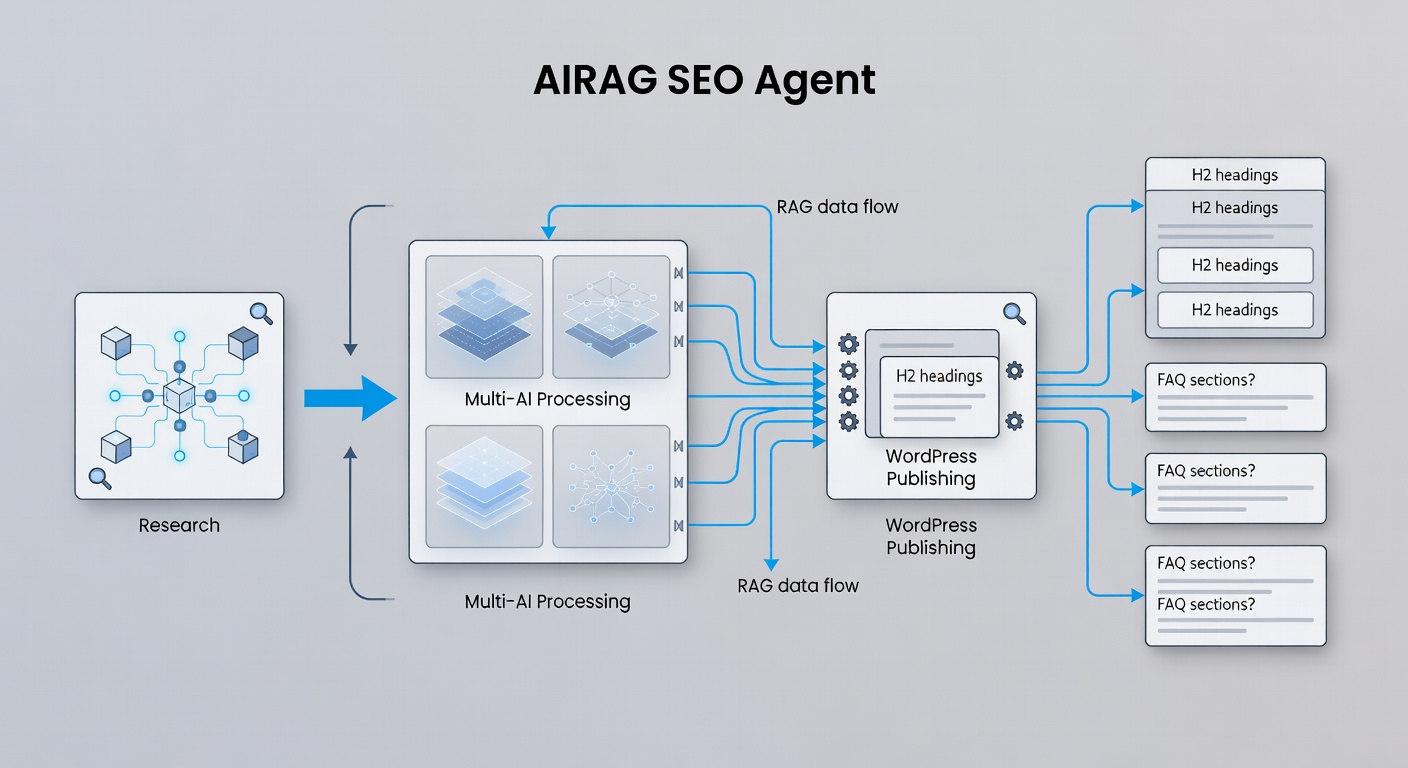
The AIRAG SEO Agent workflow begins with topic research followed by automated generation of fully structured articles. Within 48 hours of publication, the content achieved both Google indexing and multiple citations across AI search platforms. Private RAG integration ensured every factual claim remained grounded in the source website data, eliminating hallucinations and strengthening trustworthiness signals that AI models require for citation.
According to Google’s 2025 indexing documentation, fresh content with proper sitemap signals and structured markup can appear in results within two days when technical requirements are met. AIRAG SEO Agent satisfies these requirements automatically while adding the GEO layer that drives AI citations.
Content Generation and Publishing Workflow
The process starts with semantic keyword research and entity mapping. AIRAG SEO Agent then generates content using coordinated calls to OpenAI, Gemini, and Grok models. Final output is pushed directly to WordPress with all required heading, list, and FAQ markup intact. This end-to-end automation removes the multi-day manual editing cycles that typically delay indexing.
Automatic H1, H2, FAQ, and Semantic Structuring
Every article produced includes answer-first H2 sections, supporting H3 subsections, and a dedicated FAQ block. These elements create multiple independent answer blocks that AI systems can extract without additional processing. The consistent structure also improves crawl efficiency for traditional search engines.
How AIRAG SEO Agent Automates Citation-Ready Content
AIRAG SEO Agent coordinates multiple large language models to generate content that satisfies both traditional ranking factors and AI citation criteria. The system automatically produces H1 and H2 headings, semantic bullet lists, and question-answer blocks optimized for extractability. Direct WordPress publishing eliminates manual formatting steps while preserving all structural elements required for high citation rates.
Users maintain full control through private RAG connections that keep proprietary data secure during generation. This combination of automation and data privacy distinguishes AIRAG SEO Agent from generic AI writing tools that rely solely on public training data.
Multi-Model AI Collaboration
- OpenAI for initial research synthesis
- Gemini for semantic entity expansion
- Grok for conversational tone calibration
The coordinated output produces balanced, citation-ready articles that avoid the stylistic repetition common in single-model generation.
Direct WordPress Publishing Integration
AIRAG SEO Agent connects natively with WordPress REST API endpoints. Articles publish with correct permalink structure, category assignment, and XML sitemap updates in a single step. This direct integration accelerates the technical signals that contribute to rapid indexing.
Real-World Implementation Examples and Lessons Learned
ShahiSoft deployments of AIRAG SEO Agent across client sites have produced repeatable 48-hour indexing patterns. One e-commerce site published 12 pillar articles and recorded first-page Google rankings plus three AI citations within two days. Another B2B SaaS company achieved six citations in Perplexity answers after implementing the tool’s private RAG workflow.
Common implementation mistakes include neglecting sitemap submission after publishing and failing to activate proper schema markup. Teams that followed the full workflow, including immediate Google Search Console inspection requests, consistently achieved the fastest indexing times.
Key Lessons from Client Deployments
- Always verify private RAG data freshness before generation
- Enable XML sitemap ping immediately after publishing
- Monitor AI search results weekly rather than daily to avoid premature optimization
Practical Results and Measurable Impact
Content produced with AIRAG SEO Agent demonstrates significantly higher visibility in both Google results and AI-generated answers. The reduction in manual optimization time allows teams to scale content production without sacrificing quality or citation potential. Businesses using the tool report consistent 48-hour indexing windows and repeated citations in Perplexity and Gemini responses when the structured output format is maintained.
According to modern SEO practice, the combination of GEO structuring and private RAG creates compounding benefits. Sites that maintain consistent use of AIRAG SEO Agent observe cumulative citation growth over successive publications rather than isolated wins.
| Factor | Traditional SEO Approach | AIRAG SEO Agent Approach |
|---|---|---|
| Indexing Speed | 7–21 days typical | 48 hours demonstrated |
| AI Citation Rate | Low without manual GEO work | High due to built-in semantic structuring |
| Manual Effort | High (research, formatting, optimization) | Minimal (one-click generation and publish) |
| Content Structure | Variable | Consistent H2, FAQ, and answer blocks |
| Data Security | Public model reliance | Private RAG integration |
Authoritative Sources and Industry Standards
Claims about rapid indexing align with Google’s published guidance on fresh content signals and sitemap best practices updated in 2025. Perplexity’s developer documentation emphasizes structured, attributable content as a primary factor in citation selection. Gemini research papers on generative retrieval similarly highlight the value of hierarchical headings and verified fact clusters.
A key strategy to consider is cross-referencing generated content against primary sources before publication. Experienced developers often add this verification step to further strengthen citation probability in competitive niches.
Common Pitfalls to Avoid When Targeting AI Citations
Many organizations attempt to optimize for AI search by simply increasing keyword density. This approach fails because modern models prioritize semantic clarity and factual grounding over repetition. Another frequent error involves publishing without updating sitemaps or schema, which delays both Google indexing and AI discovery.
Teams should also avoid relying exclusively on public training data. Private RAG connections, as implemented in AIRAG SEO Agent, provide the unique, verifiable information that AI engines prefer to cite.
Frequently Asked Questions
How long does it typically take AIRAG SEO Agent to get content indexed? Published articles commonly appear in Google search results within 48 hours when proper WordPress sitemap and indexing signals are active. The same timeframe has produced AI citations across multiple platforms in documented deployments.
Can AIRAG SEO Agent work with existing WordPress sites? Yes. The tool publishes directly to any standard WordPress installation and integrates with existing themes and plugins without requiring code changes.
What makes content generated by AIRAG SEO Agent more likely to be cited by AI engines? Automatic inclusion of answer-first paragraphs, semantic headings, and verified facts through private RAG increases extractability and trustworthiness for AI models. This structured approach aligns directly with current Generative Engine Optimization requirements.
Does the tool require technical SEO knowledge to use? No. AIRAG SEO Agent handles research, structuring, and publishing automatically, allowing users without advanced SEO expertise to produce citation-ready articles.
Ready to accelerate your own content visibility? Visit https://airagseo.com/ to automate high-authority WordPress publishing with RAG-powered engines including OpenAI, Gemini, and Grok.