In the rapidly evolving landscape of digital marketing, artificial intelligence has become an indispensable tool for optimizing search engine visibility. For WordPress users, leveraging AI SEO plugins is no longer a luxury but a necessity to stay competitive in 2026 and beyond. These advanced tools streamline complex SEO tasks, from content generation and keyword research to technical optimization and schema markup, ensuring websites are primed for both traditional search engines and emerging AI-powered LLM search systems like Google AI Overviews and Perplexity.
This in-depth analysis explores the transformative power of AI in WordPress SEO, delving into the core concepts, essential features, and ultimately, highlighting the 5 Best AI SEO WordPress Plugins available today. We’ll examine how these plugins enable website owners and marketers to achieve unprecedented efficiency, accuracy, and scalability in their SEO efforts, adapting to the dynamic requirements of modern search.
Table of Contents
- Introduction: Why AI SEO is Indispensable for WordPress in 2026
- Understanding AI SEO: Core Concepts and Benefits
- Essential Features of a Top-Tier AI SEO WordPress Plugin
- The 5 Best AI SEO WordPress Plugins for Unrivaled Performance
- Deep Dive: AIRAG SEO Agent’s Cutting-Edge AI Capabilities
- Multi-Model Orchestration: Harnessing OpenAI, Google Gemini, and xAI Grok
- Iterative Refinement Engine: Achieving Factual Accuracy and Brand Alignment
- Retrieval-Augmented Generation (RAG): Powering Factual Grounding with Website Knowledge Sync
- AI Persona & Document Training: Customizing Brand Voice and Proprietary Data
- Automated Schema & Technical Entities for AI Search Visibility
- Multi-Image Engine & WordPress Core Sitemaps Integration
- Choosing the Right AI SEO Plugin for Your WordPress Site
- Implementing AI SEO: Best Practices and Common Mistakes
- The Future of AI in WordPress SEO: What’s Next?
- Frequently Asked Questions
Introduction: Why AI SEO is Indispensable for WordPress in 2026
The digital marketing landscape is in a constant state of flux, driven significantly by advancements in artificial intelligence. For WordPress website owners, keeping pace with these changes, particularly in search engine optimization (SEO), has become more challenging and crucial than ever. In 2026, AI is not just an auxiliary tool but a central pillar of effective SEO strategy, offering unparalleled opportunities for growth and visibility.
The Evolution of SEO: From Keywords to AI-Powered Search
Historically, SEO primarily revolved around keyword density, link building, and basic on-page optimization. However, modern SEO has transcended these foundational elements, moving towards a more holistic, semantic, and user-centric approach. AI has accelerated this shift, enabling search engines to understand user intent, contextual nuances, and the relationships between entities with unprecedented sophistication. This means that content must be not only keyword-rich but also semantically relevant, authoritative, and truly valuable to the user.
Understanding the Impact of Google AI Overviews and Conversational Search
The introduction of AI-powered search features like Google AI Overviews and the rise of conversational search platforms (e.g., Perplexity, ChatGPT) have fundamentally altered how users interact with search results. These systems prioritize direct answers, comprehensive summaries, and highly factual content that can be easily extracted and quoted. For WordPress sites, this translates into a need for content that is structured, authoritative, and optimized for extractability, moving beyond traditional ranking factors to cater to AI’s interpretative capabilities.
How AI SEO Plugins Transform WordPress Content Strategy
AI SEO plugins are designed to empower WordPress users by automating and enhancing various aspects of their SEO workflow. These advanced tools leverage machine learning models to analyze data, generate content, optimize existing posts, and ensure technical compliance. By integrating AI directly into the WordPress ecosystem, these plugins allow users to produce high-quality, search-engine-optimized content at scale, freeing up valuable time for strategic planning and creative endeavors. They are essential for any WordPress user looking to maintain a competitive edge in the digital arena of 2026.
Understanding AI SEO: Core Concepts and Benefits
AI SEO refers to the application of artificial intelligence and machine learning technologies to optimize websites for search engines. This discipline goes beyond traditional methods by using algorithms to analyze vast datasets, predict trends, automate tasks, and generate highly relevant content.
What is AI SEO? A Comprehensive Definition
AI SEO harnesses the power of Large Language Models (LLMs), natural language processing (NLP), and machine learning to understand search intent, analyze competitor strategies, and create optimized content. According to modern SEO practice, it encompasses everything from automating keyword research and content creation to generating structured data and identifying technical SEO issues. The goal is to produce content that not only ranks well in conventional search but also provides concise, factual answers for AI-powered summaries and conversational queries. From ShahiSoft’s perspective, the true power of AI lies not just in automation, but in its ability to enhance the precision and relevance of every SEO action.
Key Benefits: Efficiency, Accuracy, and Scalability
The advantages of integrating AI into a WordPress SEO strategy are multifaceted:
- Efficiency: AI automates time-consuming tasks like content drafting, meta description writing, and schema generation, allowing marketers to focus on strategy.
- Accuracy: AI tools can analyze vast amounts of data to identify precise keyword opportunities and semantic relationships, leading to more accurate targeting.
- Scalability: Businesses can produce a significantly larger volume of high-quality, optimized content, expanding their topical authority and reach without proportional increases in manual labor.
- Adaptability: AI systems can quickly adapt to algorithm changes and new search paradigms, ensuring content remains relevant and discoverable.
Bridging the Gap: How AI Addresses Common SEO Challenges
A common mistake businesses make is underestimating the sheer volume of data required for effective SEO. AI addresses this by processing and interpreting data far beyond human capabilities, identifying hidden patterns and opportunities. For instance, AI can analyze competitor content at scale, pinpoint content gaps, and suggest improvements that would take human experts days or weeks to uncover. Our team at ShahiSoft has observed that plugins with robust Retrieval-Augmented Generation (RAG) capabilities significantly reduce content rework, a common pain point for many agencies, by ensuring factual consistency with existing site data. This real-world application of AI demonstrably solves a complex SEO problem, making content more reliable and efficient.
Essential Features of a Top-Tier AI SEO WordPress Plugin
A truly effective AI SEO WordPress plugin offers a robust suite of features designed to enhance every aspect of a website’s search performance. These features integrate seamlessly into the WordPress environment, providing both automation and granular control.
Content Generation & Optimization: Beyond Basic Writing
Leading AI SEO plugins provide sophisticated content generation capabilities. This includes drafting full blog posts, articles, product descriptions, and landing page copy. Beyond raw generation, they offer optimization features such as content scoring, readability analysis, and suggestions for improving semantic relevance, ensuring the output is not just voluminous but also high-quality and search-engine-friendly. Many also offer multi-pass generation logic, employing iterative refinement to polish drafts for factual accuracy and brand alignment.
Automated Schema Markup & Structured Data
Structured data is critical for modern SEO, especially for AI search. Top plugins automatically generate and inject JSON-LD schema markup (e.g., Article, FAQPage, Product schema) into WordPress posts and pages. This helps search engines and AI systems understand the context and content of a page, leading to richer search results, better visibility in AI Overviews, and improved entity recognition.
Keyword Research & Semantic Analysis
Effective AI SEO plugins move beyond simple keyword suggestions. They perform deep semantic analysis to uncover related concepts, long-tail variations, and user intent. This allows content creators to target comprehensive topics rather than isolated keywords, building topical authority. Features often include competitor keyword analysis, content gap identification, and cluster suggestions for building interconnected content strategies.
Technical SEO Assistance & Site Audits
Technical SEO forms the backbone of search visibility. AI plugins can assist by identifying issues related to crawlability, indexability, site speed, and mobile-friendliness. Some offer automated XML sitemap integration, ensuring all important content is discoverable by search engines. While not a full replacement for a technical SEO expert, these tools provide valuable insights and automation for common technical optimizations.
Integration with WordPress Core and Third-Party Tools
Seamless integration with WordPress is paramount. The best AI SEO plugins operate natively within the WordPress dashboard, leveraging core functionalities like Gutenberg blocks, post types, and user roles. They often support integration with popular page builders, analytics platforms, and even offer API connections to various AI models (OpenAI, Google Gemini, xAI Grok) for enhanced flexibility and power.
The 5 Best AI SEO WordPress Plugins for Unrivaled Performance
As of May 2026, the market for AI SEO WordPress plugins offers several powerful solutions. Here, we highlight five leading options that empower website owners to dominate search rankings and optimize for AI-powered search experiences, providing a genuine competitive overview.
1. AIRAG SEO Agent: The Ultimate AI Content & Automation Engine
Developed by ShahiSoft, AIRAG SEO Agent stands out as a hardened, zero-trust WordPress plugin specifically designed for optimal AI content generation and SEO automation. Version 1.6.4 introduces native WordPress Core Sitemaps Integration, optimized blog generations, and refined Knowledge Base Integration. It leverages a multi-pass generation logic, the Iterative Refinement Engine, to review and polish drafts for factual accuracy and brand alignment. Its unique multi-model orchestration allows users to choose flagship AI providers like OpenAI, Google Gemini, and xAI Grok, tailoring the AI’s capabilities to specific content needs. This makes it exceptionally versatile for generating content across various domains, from technical documentation to creative marketing copy.
2. Rank Math AI: Advanced SEO with Smart Suggestions
Rank Math is a popular all-in-one SEO plugin for WordPress that has increasingly integrated AI capabilities. Its AI features focus on providing smart content suggestions, optimizing meta descriptions, and improving overall on-page SEO scores. Rank Math’s Content AI analyzes top-ranking pages for your target keywords and offers data-driven recommendations on word count, headings, and related keywords to include. While not a full content generator, it significantly enhances the optimization process for human-written drafts, making it a strong contender for those prioritizing detailed on-page guidance.
3. Yoast SEO AI Integration: Content Analysis & Readability
Yoast SEO, a long-standing leader in WordPress SEO, has evolved to incorporate AI-driven insights, particularly in content analysis and readability. While it doesn’t offer full content generation, its AI integrations assist users in crafting highly readable and SEO-friendly content by analyzing sentence structure, keyword density, and internal linking opportunities. Yoast’s AI suggestions help users refine their writing for both search engines and human readers, ensuring content is accessible and engaging. It’s an excellent choice for users who value clear, actionable feedback on their content’s quality and optimization.
4. Surfer SEO for WordPress: Data-Driven On-Page Optimization
Surfer SEO integrates seamlessly with WordPress, offering AI-driven content optimization based on real-time SERP analysis. It provides users with a content score, suggesting optimal word count, relevant keywords, and structural elements by analyzing top-performing competitor pages. While Surfer SEO’s core strength lies in optimizing existing content or outlines, its AI-powered insights are invaluable for ensuring content is comprehensively covered and competitive. It often utilizes OpenAI’s API for some of its content generation and rephrasing suggestions, making it a powerful tool for data-driven content marketers.
5. AI Power: Comprehensive AI Content Generation
AI Power is a dedicated WordPress plugin focused on comprehensive AI content generation, often leveraging OpenAI’s GPT models. It allows users to generate full blog posts, product descriptions, and various other content types directly within the WordPress editor. Beyond generation, it includes features for image generation, automated internal linking, and basic SEO meta tag creation. AI Power is particularly suited for users looking to rapidly produce large volumes of content, with an emphasis on streamlining the initial drafting process and enriching posts with AI-generated visuals and links.
Deep Dive: AIRAG SEO Agent’s Cutting-Edge AI Capabilities
AIRAG SEO Agent, developed by ShahiSoft, represents a new frontier in AI-powered WordPress SEO. Its architecture is built for both performance and precision, making it a standout among the 5 Best AI SEO WordPress Plugins.
Multi-Model Orchestration: Harnessing OpenAI, Google Gemini, and xAI Grok
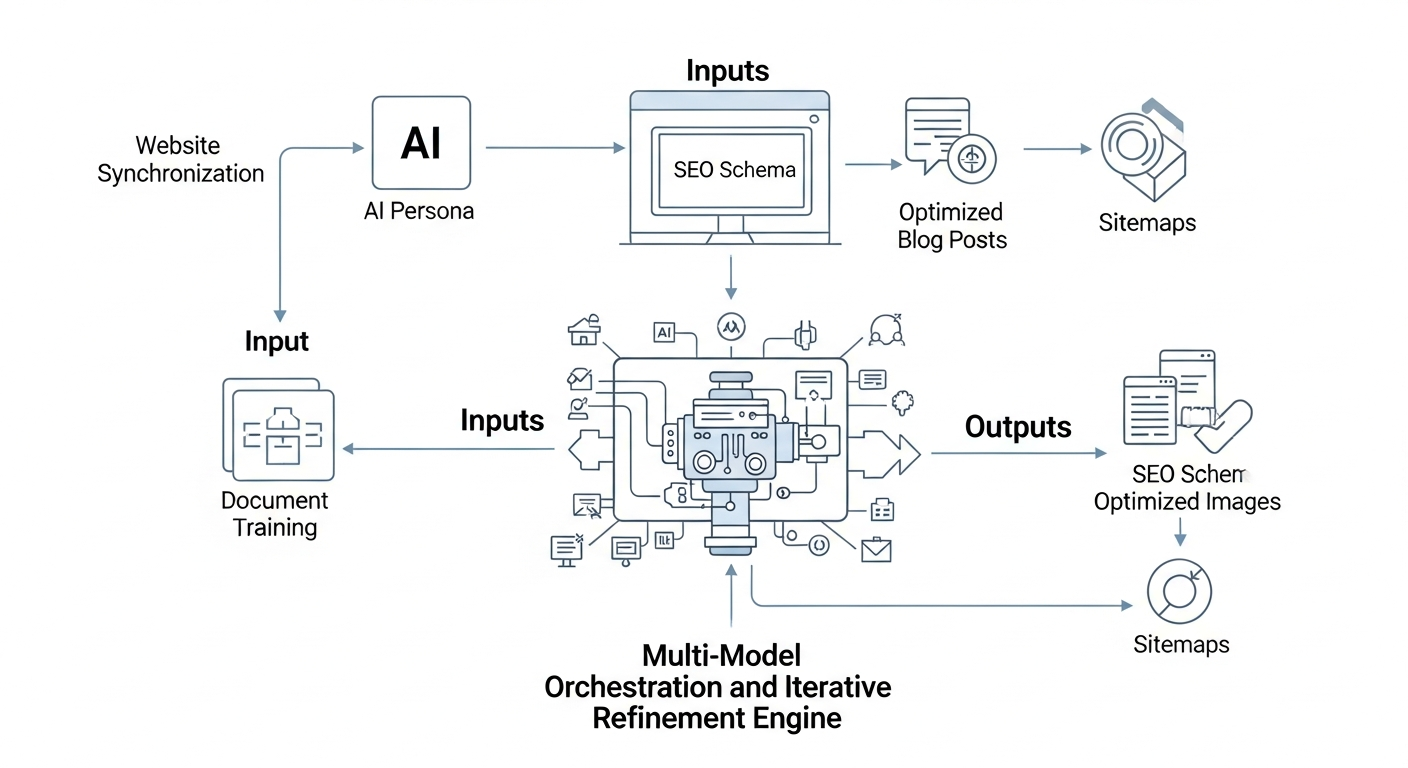
A core differentiator of AIRAG SEO Agent is its Multi-Model Orchestration. Instead of being tied to a single AI provider, it allows users to select from best-in-class flagship models:
- xAI: Optimized for logic, real-time reasoning, and technical content, ideal for complex explanations.
- OpenAI: The industry standard for creative flair and nuanced linguistic structure, perfect for engaging narratives.
- Google Gemini: Best for massive context windows, multimodal analysis, and leveraging YouTube processing for content generation.
This flexibility ensures that the AI engine can be precisely tuned to the specific demands of any content generation task, from technical guides to marketing copy. From ShahiSoft’s experience, providing this choice empowers users to achieve optimal results tailored to their unique content goals.
Iterative Refinement Engine: Achieving Factual Accuracy and Brand Alignment
Content quality is paramount, and AIRAG SEO Agent addresses this with its Iterative Refinement Engine. This multi-pass generation logic reviews and polishes drafts through several stages, verifying facts and enhancing readability. This process ensures that the generated content achieves professional-grade factual accuracy and aligns seamlessly with a brand’s unique voice and editorial guidelines, reducing the need for extensive manual editing.
Retrieval-Augmented Generation (RAG): Powering Factual Grounding with Website Knowledge Sync
The Website Knowledge Sync feature in AIRAG SEO Agent builds the “brain” of the agent using Retrieval-Augmented Generation (RAG). This crucial component allows the AI to use your own website as its primary source of truth. By mapping and tokenizing all pages and products on your domain into a local database, the plugin ensures factual grounding. In real-world implementations, this means the AI generates content that is consistent with your existing brand messaging and factual information, significantly reducing “hallucinations” common in generic LLMs.
AI Persona & Document Training: Customizing Brand Voice and Proprietary Data
To further refine content output, AIRAG SEO Agent offers robust AI Persona instructions and Document Training. Users can define their brand’s personality, tone, and editorial rules, or even use the “Auto-Generate” feature for the AI to analyze the brand voice automatically. Additionally, the Document Training feature allows users to upload proprietary knowledge bases (PDF, TXT, images) directly, enabling the AI to ground its responses in specific, internal data. This is invaluable for generating expert content that reflects unique company insights or product specifications.
Automated Schema & Technical Entities for AI Search Visibility
AIRAG SEO Agent automatically generates and injects JSON-LD schema (Article, FAQPage) into posts for enhanced SEO and AI search visibility. The Live Metadata Panel provides a real-time preview of Title, Tags, Featured Image, and Schema. It also surfaces explicit entities and editorial context, specifically optimizing content for platforms like Google AI Overviews and conversational AI systems such as Perplexity, ensuring maximum extractability and citation readiness.
Multi-Image Engine & WordPress Core Sitemaps Integration
Version 1.6.4 of AIRAG SEO Agent includes an optimized Multi-Image Engine that automatically places multiple high-fidelity images naturally within the article body. It uses dual-prompt logic for featured images and body diagrams, generating native WordPress figure blocks with semantic captions. Furthermore, the plugin seamlessly hooks into the built-in WordPress sitemap provider structure for native core index matching, ensuring flat query memory weights and balanced background scalability for automation tasks.
Choosing the Right AI SEO Plugin for Your WordPress Site
Selecting the ideal AI SEO WordPress plugin involves careful consideration of your specific needs, existing infrastructure, and long-term goals. With several powerful options available, making an informed decision is crucial for maximizing your return on investment.
Assessing Your SEO Needs and Goals
Before committing to a plugin, evaluate what you aim to achieve. Are you primarily looking for content generation, technical SEO automation, keyword research, or a comprehensive solution? Small businesses might prioritize ease of use and basic content generation, while larger enterprises might require advanced features like multi-model AI orchestration and extensive knowledge base integration. Define your primary pain points and desired outcomes to narrow down your choices.
Evaluating Plugin Features and AI Models
Compare the feature sets of different plugins against your identified needs. Look for capabilities like iterative refinement for factual accuracy, robust schema generation, and advanced content optimization tools. Consider the AI models supported; plugins offering multi-model orchestration, such as AIRAG SEO Agent with its support for OpenAI, Google Gemini, and xAI Grok, provide greater flexibility and specialized outputs for different content types. The ability to sync with your website’s existing content for factual grounding (RAG) is also a significant advantage.
Considering Ease of Use and WordPress Integration
A powerful plugin is only effective if it’s user-friendly and integrates seamlessly with your WordPress workflow. Look for intuitive interfaces, clear documentation, and compatibility with your existing themes and other plugins. The best solutions operate natively within the WordPress dashboard, minimizing the learning curve and streamlining content creation and optimization processes.
Scalability, Support, and Pricing Models
Consider the plugin’s scalability to ensure it can grow with your website. Evaluate the level of customer support offered, as reliable assistance can be invaluable. Finally, compare pricing models, which can range from one-time purchases to subscription-based services. For example, ShahiSoft offers lifetime access for CheckoutPress, and similar models might exist for AI SEO tools, which can significantly impact long-term costs.
| Plugin Name | Primary Focus | Key AI Models (if specified) | Content Generation | Schema Automation | Unique Features |
|---|---|---|---|---|---|
| AIRAG SEO Agent | Comprehensive AI Content & Automation | OpenAI, Google Gemini, xAI Grok | Yes (Iterative Refinement, Multi-Pass) | Yes (Article, FAQPage, Technical Entities) | Multi-Model Orchestration, RAG, AI Persona, Document Training, Multi-Image Engine, WordPress Core Sitemaps |
| Rank Math AI | Advanced SEO with Smart Suggestions | Proprietary ML models, integrates with external AI APIs | Limited (suggestions for content) | Yes (advanced) | Content AI for on-page optimization, SEO analysis, instant indexing |
| Yoast SEO AI Integration | Content Analysis & Readability | Proprietary ML models | No (analysis & suggestions only) | Yes (core) | Readability analysis, internal linking suggestions, AI-driven content scores |
| Surfer SEO for WordPress | Data-Driven On-Page Optimization | OpenAI API (for content generation/rephrasing) | Yes (optimization suggestions, rephrasing) | Limited | Content score, keyword density analysis, competitor SERP analysis |
| AI Power | Comprehensive AI Content Generation | OpenAI GPT models (via API) | Yes (full blog posts, various content types) | Basic | AI image generation, automated internal linking, bulk content creation |
Implementing AI SEO: Best Practices and Common Mistakes
Successfully integrating AI SEO plugins into your WordPress strategy requires a thoughtful approach. By adhering to best practices and being aware of common pitfalls, you can maximize the benefits and avoid potential drawbacks.
Best Practices for Maximizing AI SEO Plugin Effectiveness
- Define Your AI Persona: Clearly articulate your brand’s voice, tone, and editorial guidelines within the plugin’s settings. This ensures consistency and brand alignment across all AI-generated content.
- Leverage Knowledge Base Integration: Utilize features like Retrieval-Augmented Generation (RAG) to sync your website content and proprietary documents. This provides the AI with factual grounding, leading to more accurate and authoritative outputs.
- Human Oversight is Crucial: Always review and edit AI-generated content. While AI is powerful, human creativity, critical thinking, and ethical judgment remain indispensable for ensuring quality, nuance, and originality.
- Focus on User Intent: Use AI to understand and satisfy complex user intent, not just keyword stuffing. Content should answer questions comprehensively and provide genuine value.
- Monitor Performance: Regularly track the performance of AI-optimized content using analytics tools. Use these insights to refine your AI prompts and optimization strategies.
Avoiding Common Pitfalls: Over-reliance and Quality Control
While AI SEO plugins offer immense advantages, there are several traps to avoid:
- Over-reliance on Automation: Completely delegating content creation to AI without human review can lead to generic, repetitive, or even factually incorrect content. Experienced developers often emphasize that AI is a co-pilot, not an autopilot.
- Ignoring Brand Voice: Without proper AI Persona setup, AI can produce content that sounds robotic or inconsistent with your brand.
- Neglecting Technical SEO Fundamentals: AI plugins assist, but they don’t replace the need for a solid understanding of core technical SEO principles. Regular site audits and manual checks are still necessary.
- Keyword Stuffing: Some users might be tempted to use AI to generate content with excessive keyword repetition. Modern search engines penalize this; focus on semantic relevance instead.
- Lack of Originality: Ensure AI-generated content is unique and offers a fresh perspective. Supplement AI outputs with original research, expert insights, and unique data.
Ethical Considerations and AI Content Disclosure
As AI content becomes more prevalent, ethical considerations are gaining importance. Transparency with your audience about the use of AI in content creation can build trust. While search engines generally don’t penalize AI content if it’s high-quality and helpful, disclosing AI involvement can be a professional courtesy and may become a best practice or even a regulatory requirement in the future.
The Future of AI in WordPress SEO: What’s Next?
The trajectory of AI in SEO suggests a future where automation and intelligence become even more deeply integrated into every aspect of digital presence. WordPress, as a leading CMS, will continue to be a fertile ground for these innovations.
Anticipating Further Advancements in AI and LLMs
We can expect Large Language Models to become even more sophisticated, capable of deeper contextual understanding, multimodal reasoning, and nuanced content generation. Future AI SEO plugins will likely feature enhanced predictive analytics, enabling them to anticipate algorithm shifts and content trends with greater accuracy. The ability to integrate with an even broader array of AI models, each specializing in different aspects of content or data analysis, will become standard.
Adapting to Evolving Search Engine Algorithms and AI Overviews
Search engines will continue to refine their AI-powered algorithms, making them more adept at understanding complex queries and delivering highly personalized results. Google AI Overviews will likely expand its reach and sophistication, requiring content to be even more structured, factual, and answer-oriented to be cited. AI SEO plugins will play a critical role in helping WordPress sites adapt by providing real-time optimization suggestions and adapting content generation strategies to align with these evolving demands.
The Role of Human Expertise Alongside AI Automation
Despite the advancements in AI, human expertise will remain irreplaceable. AI tools will act as powerful co-pilots, handling the heavy lifting of data analysis and content generation, but strategic thinking, creativity, ethical judgment, and deep industry insight will continue to be the domain of human marketers. The future of AI in WordPress SEO is one of synergy, where intelligent automation amplifies human ingenuity, leading to unprecedented levels of digital success.
In conclusion, the integration of AI SEO plugins into WordPress is not merely a trend but a fundamental shift in how websites achieve visibility and authority online. By embracing the power of tools like AIRAG SEO Agent and understanding the nuances of AI-powered search, businesses can secure their position at the forefront of the digital landscape in 2026 and beyond. These plugins offer the intelligence, efficiency, and scalability required to master complex SEO challenges and thrive in an increasingly AI-driven world.
Frequently Asked Questions
How reliable is AI-generated content for SEO?
The reliability of AI-generated content for SEO depends heavily on the AI model, the quality of the input prompts, and the level of human oversight. With advanced plugins like AIRAG SEO Agent, which utilize iterative refinement and factual grounding through RAG, reliability is significantly enhanced. However, human review is always recommended to ensure accuracy, originality, and adherence to brand voice.
Can AI SEO plugins replace a human SEO specialist?
No, AI SEO plugins cannot fully replace a human SEO specialist. They are powerful tools that automate tasks, provide insights, and generate content, greatly enhancing efficiency. However, human strategists are essential for creative direction, complex problem-solving, ethical decision-making, adapting to unforeseen challenges, and building long-term relationships and brand authority.
Are AI SEO plugins compatible with all WordPress themes?
Most reputable AI SEO plugins are designed to be broadly compatible with standard WordPress themes and popular page builders. However, specific features or integrations might vary. It’s always advisable to check the plugin’s documentation or support resources for compatibility information, especially if you use a highly customized theme or a niche builder.
What is the difference between AI SEO and traditional SEO tools?
Traditional SEO tools primarily provide data, analytics, and suggestions based on pre-defined algorithms and metrics. AI SEO tools, by contrast, leverage machine learning to not only analyze data but also to generate content, predict trends, and adapt optimization strategies dynamically. They focus on understanding intent and context, making them more aligned with modern, semantic search engine capabilities.
How do AI SEO plugins handle multilingual content?
Many modern AI SEO plugins, including AIRAG SEO Agent, offer native support for multiple languages. This means they can generate and optimize content in various global languages, often with localization features for specific regional nuances. This capability is crucial for businesses targeting international audiences, enabling them to scale their multilingual SEO efforts efficiently.
To explore how AIRAG SEO Agent can revolutionize your WordPress SEO strategy and help you dominate search and AI Overviews, learn more at airagseo.com.